|
Fishing Victoria, BC
Sport Fishing South Vancouver Island
SOUTH
COAST
Barkley
Sound •
Campbell River • Clayoquot,
Nootka & Kyuquot Sounds •
•
Southern
Vancouver Island • Northern Vancouver
Island • Sunshine Coast
•
•
Strait of Georgia (Courtenay, Comox & Nanaimo) • Vancouver
& Howe Sound
Sport Fishing Victoria and Southern Vancouver Island, BC
Easily accessible
from Vancouver via BC Ferries,
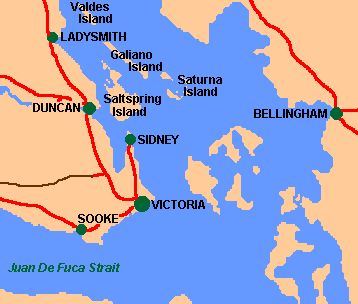
the spectacular areas of Sooke,
Victoria,
Saanich, and the Gulf Islands offers the angler good to excellent salmon
fishing.
In the Summer,
when an incredible tyee salmon run can occur suddenly, with a flurry of
action along the greater Victoria waterfront the "Esquimalt boys"
often catch some beauties up to forty plus pounds along the kelp beds
in water shallow enough to see the bottom at times. These lucky anglers
are a seasoned breed of mariner knowing all the tricks it takes to hook
and land big springs that tear out line, a hundred yards at a time. (See
Game Fish of BC)
Thick bull
kelp beds are found along this mainly rocky shore of southern Vancouver
Island, Here lies darkened clear ice-cold water that is perfect refuge
for large schools of baitfish affording a little protection from the relentless
feeding of big springs from below, plus pelagic birds of all sorts from
above the surface. The result is a feeding frenzy beside the curtain of
kelp, or any place the hungry salmon can surround their prey, with daybreak
and the first hour or two being prime time This narrow zone can be fished
with trolled gear in extremely shallow water of thirty feet or less with
the big wild springs aggressively grabbing a lure and immediately taking
off for deep water. Helmsman in other boats must watch for strikes in
order to avoid crossing up lines from their fellow anglers by quickly
accelerating, turning about and getting far away from a runaway fish.
Some nightmare stories of lost tackle and heavy-weight fish are told each
year due to the incompetence of a few boat handlers.
Tackle
for Sport Fishing Victoria & Southern Vancouver Island
Downriggers with light tackle that releases when fish strike, are used
by the majority of salmon fisherman, but 8 foot trolling rods with slip
weights remain popular. Mainlines of 30 to 50 pound test, and five to
seven foot leaders of 20 to 40 pound test are common. Flashers and dodgers
are used by most.
Locations for Fishing Victoria
Luckily you
have a large area to choose when salmon fishing Victoria waterfronts.
Lots of reefs, islands, and prominent points of land with some fast currents
and rip tides to contend with also. Anchovy, needlefish, pacific herring,
shrimp, squid, krill, or sandlance are some of the big springs favorite
food, so top quality bait or imitation with an erratic crippled action
is a good bet. Always look for gulls and cormorants to show you where
the feed is. Trolling or casting lures beside a herring "ball-up"
can trigger an immediate strike at times.
Oak Bay,
Discovery Island, Brotchie Ledge, Macaulay Point, Albert Head, Pedder
Bay, Beachy Head, or Otter Point are just a few of the hot spots to try,
but close scrutiny of chart #3440 will reveal many more. I like to avoid
the crowded spots and venture away to find my own hot spot since the fish
are free to roam wherever they choose and it makes for a more relaxed
day out. So if your are lucky enough to enjoy sport fishing Southern Vancouver Island, keep a sharp eye on the weather, practice catch and release, and
enjoy the excitement that a "Victoria screamer" will bring.
Feeder
springs are found year round while the main run shows up around
mid-May and continues on through the summer months. Fishing for
Bluebacks is good in May while the bulk of Coho show up in June.
Coho fishing continues to be good through September and large
northerns can still be caught in October. Pink and Sockeye are
best fished during late July through August. In recent years Halibut
have been making a comeback in the Juan de Fuca area and is now
considered a worthwhile venture during the spring and early summer
months.
Articles
about Fishing Victoria & Southern Vancouver Island:
©
1996 -
2025 Interactive Broadcasting Corporation
|